
About SCAAR
Researching Conflict, Aggression, and Abuse Between Brothers and Sisters
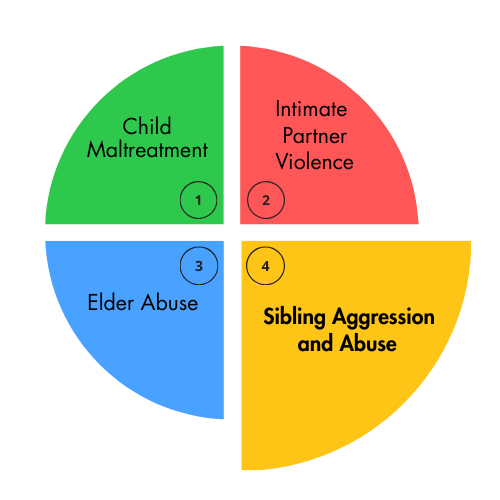
“Sibling conflict is arguably the most common form of domestic violence. It’s also the most under-researched. It’s often seen as inconsequential - as kids just being kids.”
~ Dr. Joseph Michalski

“In Canada, there have been national studies on child abuse, intimate partner violence, and elder abuse, but none on sibling conflict and violence.
This new study on adolescent sibling conflict, aggression, and abuse fills this gap, by providing national data on how common these behaviours are in Canada.”
~ Dr. Geneviève Bouchard, Co-Lead Investigator, Université de Moncton, Moncton, New Brunswick
“I think the research will resonate with people anywhere and everywhere who grew up with siblings and perhaps wondered if the aggression and even violence they experienced was 'normal.' And that’s crucial, as so much of sibling aggression and abuse has been 'normalized,' to the point where some young people have been and are currently being seriously harmed by their siblings.”
~ Dr. Joseph Michalski, Co-Lead Investigator, King's University College, London, Ontario
Research on family violence consistently shows that the most common abuse of children is perpetrated by a sibling, and it outnumbers children abused by parents, peer bullying, and intimate partner violence combined. Yet clarifying research is sparse, and our culture accepts it as normal. We accept teasing and name-calling, some level of fighting, roughhousing and bickering. We tend to paint all sibling conflict with the ‘sibling rivalry’ brush. But the spectrum from sibling conflict to sibling abuse is broad.
How broad is it? Why do some siblings figure out how to get through the conflicts with their relationships intact and others become estranged as adults? What are the individual personality, family, community, and cultural factors that increase or decrease the likelihood of violence and aggression?
In 2024-2025, almost 1000 Canadians between 19 and 24 years old completed surveys and participated in interviews to help us answer those questions. We also look at how often these behaviours occur, how serious they are, what causes them and how they affect mental health, well-being, and development over time.
The research team includes experts in sociology, psychology, social work, family studies, and demography, building new interdisciplinary knowledge about sibling violence and its causes and effects. We determined four main goals for the research:
GOAL #1
Sibling conflict resolution
Examine how siblings handle conflicts during adolescence, from everyday disagreements to more serious behaviours, including how much they use aggression or abuse.
GOAL #2
Risk factors
Identify personal, family, and community factors linked to sibling aggression and abuse, using an ecological approach.
GOAL #3
Impact
Study both short-term and long-term effects of these behaviours on health, well-being, and social development.
GOAL #4
Public Awareness, Training, Prevention
Find patterns in individual and family traits, contexts, and resources to guide a public education campaign and create prevention programs that teach siblings healthy ways to handle conflict.
Our findings will help improve family well-being through public education and provide useful guidance for parents, clinicians, teachers and policymakers to address sibling aggression and abuse more effectively.